
New York taxes estates at a comparatively low threshold but — like nearly every other estate tax state — imposes no gift tax. For married couples with taxable estates, that single feature of the law creates one of the most powerful planning opportunities available — and the Spousal Lifetime Access Trust, or SLAT, is among the best ways to use it.
A SLAT lets one spouse move substantial wealth, and all of its future growth, out of the taxable estate while the couple retains indirect access to those assets through the other spouse. When the gift is completed more than three years before the donor’s death, the transferred assets escape the New York estate tax entirely. Because of New York’s estate tax “cliff,” surviving that three-year window can convert a six- or seven-figure New York estate tax bill into little or nothing.
How does a SLAT Work?
The Basic Structure
The donor spouse transfers assets by completed gift to an irrevocable trust. The beneficiary spouse is a permissible distributee during his or her lifetime, typically under either an ascertainable standard — health, education, maintenance, and support — or a broader wholly discretionary standard. Because the beneficiary spouse may receive distributions, the couple retains indirect access to the transferred wealth so long as they remain married and the beneficiary spouse is living. An independent or non-donor trustee is generally used to administer discretionary distributions.
Beneficiaries: Spouse First, Then Children and Issue
A typical SLAT names the beneficiary spouse as the primary lifetime beneficiary, with the couple’s children and more remote issue as additional lifetime and remainder beneficiaries. The trustee may “spray” or “sprinkle” income and principal among the spouse and descendants in its discretion. On the beneficiary spouse’s death, the trust continues for — or is distributed to — the children and issue, either outright or in continuing trusts with a withdrawal ladder providing staged access at specified ages. Where generation skipping tax (“GST”) exemption is allocated, the trust can operate as a dynasty trust with no withdrawal rights, thus benefiting multiple generations free of additional transfer tax.
Grantor Trust Status
A SLAT is ordinarily drafted as a grantor trust as to the donor spouse under Internal Revenue Code §§ 671–678 — principally § 677(a), under which income that may be applied for the benefit of the grantor’s spouse is taxed to the grantor, so that the donor pays the income tax on trust income. This is a feature, not a defect. The donor’s payment of the trust’s income tax is not itself a gift (Rev. Rul. 2004-64), and it allows the trust assets to grow income-tax-free for the beneficiaries — effectively transferring additional wealth outside the transfer tax system.
What are the Federal Benefits?
- Using exemption while it is available. A gift to the SLAT uses the donor’s federal basic exclusion amount. Under the One Big Beautiful Bill Act, the federal exclusion is $15 million per person for 2026, indexed for inflation, and is no longer scheduled to sunset. Exemption levels nonetheless remain subject to future legislative change, and locking in exemption through a completed gift hedges that risk. The IRS anti-clawback regulations (Treas. Reg. § 20.2010-1(c)) generally protect completed gifts made while a higher exemption is in effect.
- Removing future appreciation. All post-gift appreciation on the transferred assets accrues outside the donor’s estate. This is often the largest single component of the tax savings.
- Generation-skipping planning. Allocating GST exemption to the SLAT allows it to benefit children, grandchildren, and later generations free of additional estate and GST tax.
Why does the New York Three-Year Rule Matter So Much?
New York imposes an estate tax but no separate gift tax. That structural feature is what makes lifetime gifting — including gifts to a SLAT — so effective for New York residents. A completed lifetime gift generally removes the asset from the New York gross estate. There is, however, one critical exception.
The Add-Back Rule
Under New York Tax Law § 954(a)(3), the New York gross estate of a resident decedent is increased by the amount of any taxable gift under Internal Revenue Code § 2503 that is not otherwise included in the federal gross estate and that was made during the three-year period ending on the decedent’s date of death. The statute excepts four categories of gifts: gifts made when the decedent was not a New York resident; gifts made before April 1, 2014; gifts made between January 1, 2019 and January 15, 2019; and gifts of real or tangible personal property having an actual situs outside New York at the time the gift was made.
Two features of the 2025 amendment to § 954(a)(3) deserve attention. First, the add-back now sunsets: by its terms the paragraph does not apply to the estate of a decedent dying on or after January 1, 2032. Second, the amount by which the New York estate tax is increased by reason of the add-back is treated as an obligation of the decedent as of the date of death — a recharacterization intended to secure a federal deduction under Internal Revenue Code §2053(a)(3), although that amount is expressly not deductible for New York purposes.
The corollary is the planning opportunity: a completed gift made more than three years before death is not added back to, and therefore permanently escapes, the New York estate tax.
If the transfer to the SLAT is completed and the donor survives it by more than three years, the transferred assets — and all of their appreciation — are excluded from the donor’s New York gross estate entirely.
The New York “Cliff”
New York provides an estate tax exclusion indexed for inflation. But the benefit of that exclusion phases out rapidly once the New York taxable estate exceeds the exclusion, and it disappears completely — the “cliff” — once the estate exceeds 105% of the exclusion amount. Above the cliff, the estate is taxed on every dollar from the first, not merely on the excess.
Because of the cliff, reducing the New York taxable estate below (or further below) the exclusion through a SLAT gift that survives the three-year period can yield disproportionately large savings. The exclusion is currently $7.35 million, and the top New York estate tax rate is 16%. The precise exclusion and cliff threshold are indexed annually and should be confirmed for the year of the planning and the year of death — but the planning principle does not depend on the specific figure: complete the gift, and survive three years.
An Illustration
Assume a New York resident with a taxable estate meaningfully above the cliff makes a completed $5 million gift to a SLAT and survives more than three years. That $5 million, and its later growth, is removed from the New York gross estate. At New York rates approaching 16% at the margin, the New York tax on that $5 million would be on the order of $700,000 to $800,000 standing alone; once the cliff effect on the balance of the estate is taken into account, the New York savings can approach or exceed seven figures, while the couple retains indirect access to the transferred wealth through the beneficiary spouse.
The Risks, and How They Are Managed
A SLAT is powerful, but it is unforgiving if drafted or administered carelessly.
Five issues deserve particular attention.
- Loss of access on death or divorce. The donor’s indirect access runs through the beneficiary spouse. If that spouse predeceases the donor, or the couple divorces, indirect access is lost — though the children and issue continue as beneficiaries. A lifetime power of appointment in the beneficiary spouse, a floating-spouse (“any person to whom I am married”) definition, or life insurance to replace access, are common mitigants.
- The reciprocal trust doctrine. If both spouses create SLATs for each other that are substantially identical, the IRS may “uncross” the trusts under the reciprocal trust doctrine (United States v. Estate of Grace, 395 U.S. 316 (1969)), pulling each trust back into the respective donor’s estate. Where both spouses wish to create SLATs, the two trusts must be made materially different — different funding dates and assets, different distribution standards and powers, different trustees, and different beneficiary classes or powers of appointment.
- Retained enjoyment under § 2036. The gift must be complete, and the donor must not retain — expressly or by implied understanding — the beneficial enjoyment of the transferred property. Where the formalities are not respected, the transfer may be disregarded outright on substance-over-form and step-transaction grounds (see, for example, Smaldino v. Commissioner, T.C. Memo. 2021-127 (Nov. 10, 2021) where the court disregarded an interim transfer of LLC interests to the donor’s spouse who then transferred the property to a trust of which the donor was the beneficiary, together with other cases and rulings where an implied understanding that the donor will continue to enjoy the property caused inclusion under Internal Revenue Code § 2036). The donor should not serve as trustee with discretionary distribution power over himself or herself, and formalities must be respected.
- Gift formalities and valuation. Two different three-year periods are at work, and they do not run together. The federal gift tax statute of limitations under Internal Revenue Code §6501 runs three years from the filing of a Form 709 that adequately discloses the gift, which makes timely reporting and qualified appraisals for hard-to-value assets essential. The New York add-back period, by contrast, runs three years from the date of the completed gift itself, not from the filing of any return.
- The basis trade-off. Assets given to a SLAT do not receive a new income tax basis at the donor’s death — no “step-up” under Internal Revenue Code § 1014. For low-basis, highly appreciated assets, the estate tax savings should be weighed against the loss of basis step-up. Swap or substitution powers retained by the grantor under Internal Revenue Code § 675(4)(C) can be used to re-acquire low-basis assets later.
The Bottom Line
A SLAT allows a married New York couple to move substantial wealth — and its future appreciation — out of the taxable estate while preserving indirect access through the beneficiary spouse and providing for children and issue. Because New York imposes no gift tax, a completed gift to a SLAT removes the assets from the New York estate. And because of the three-year add-back rule and New York’s cliff, completing that gift more than three years before death can eliminate a very large New York estate tax that would otherwise apply.
The strategy must be implemented with care. But where the reciprocal trust doctrine, Internal Revenue Code § 2036, completed-gift formalities, and the basis trade-off are properly addressed, the SLAT is among the most effective tools available to New York residents who want to reduce estate tax without fully relinquishing access to their wealth. The one variable no one controls is time — which is why, for couples who are candidates, the most expensive decision is usually the decision to wait.
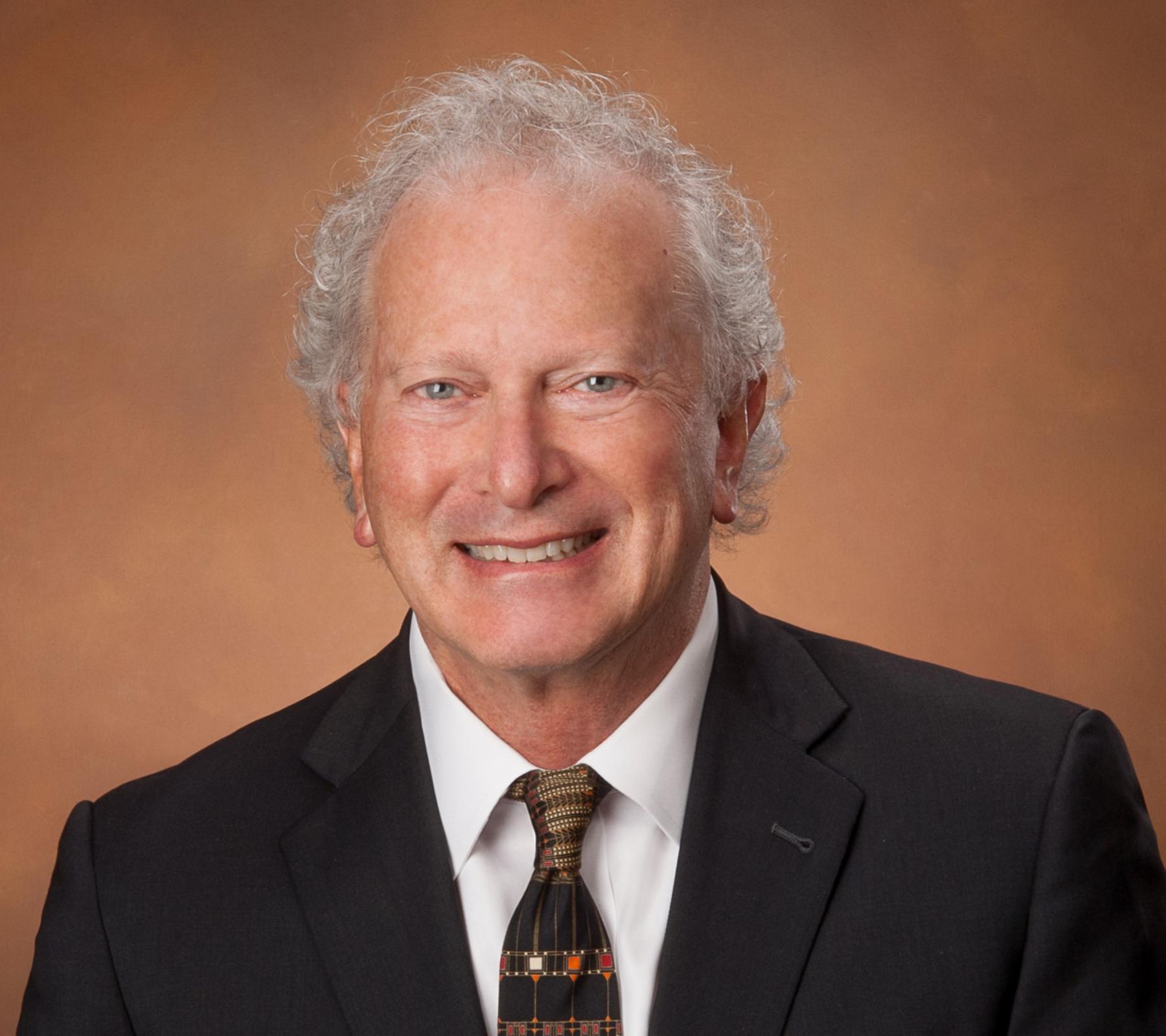
David A. Holstein
Individuals seeking to preserve their wealth, pass down a family business, or maximize the value of their companies need intelligent planning that reflects in-depth knowledge of business, tax and estate law—and the certainty that the professional providing this sensitive level of service can be trusted. For over 30 years, individuals and businesses have trusted David Holstein to protect and position their assets for optimal growth, minimize their tax liabilities, and listen, understand and respond to their concerns.
David creates highly sophisticated wills, trusts and pre-marital agreements for his Estate Planning clients, allowing him to personalize these documents in accordance with each client’s specific wishes. David’s unique depth and breadth of expertise, his attention to detail, and his constant attention to the newest planning strategies and to developments in the law, gives him the skills to successfully guide his clients in all areas of estate planning.
Learn more about David >>>
dholstein@bhlawpllc.com | 315-701-6301