
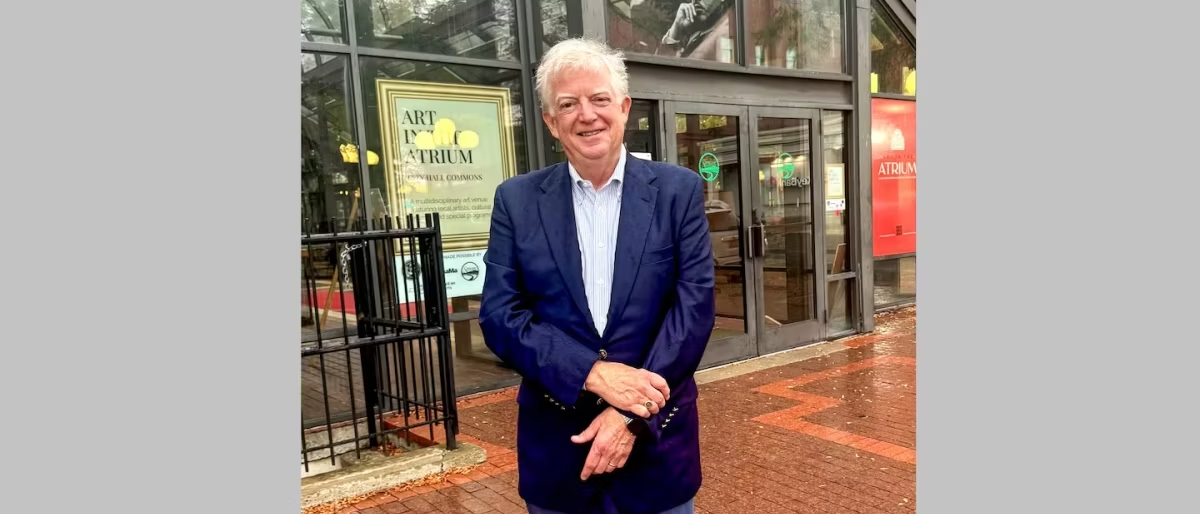
Larry Bousquet studied history in college and had a choice to make after graduation: continue his history studies in graduate school or go to law school.
“My dad, Joe Bousquet, probably said, listen, once you have that law degree, you’ll always have something,” Bousquet says. “I wanted to go to law school not because I knew anything about practicing law. It was because I was interested in politics, and I thought it was a good basis for that.”
Bousquet started his law career at Bond, Schoeneck & King. He was the fourth or fifth lawyer to join the Green & Seifter law/accounting firm in 1984. “We were doing lots of interesting things in the area of private placements and raising capital for real estate projects locally,” he says. “We raised money for the first non-wireline cellular telephone franchise. It was completely new to me.”
When the firm’s founders moved on to other pursuits in 2012, the accounting side became Grossman St. Amour CPAs PLLC. The law side became Bousquet Holstein PLLC, named after its co-founders, Bousquet and David Holstein.
The firm started with about a dozen attorneys. It now has 60 lawyers in a wide variety of practice areas, and employs about 150 people in total. Bousquet Holstein maintains offices in One Lincoln Center in downtown Syracuse and in Ithaca. Its brownfields practice is a leader in New York state, Bousquet says.
Bousquet is a graduate of Henninger High School, Kenyon College and the Syracuse University College of Law. He is deeply involved in the community. A partial list of volunteer positions includes co-founder of Central Current Inc., a nonprofit news organization in Syracuse; treasurer of the Dunbar Association; trustee of the Crouse Health Foundation; CenterState CEO board member; and former member of Consensus, the Commission on Local Government Modernization.
Bousquet took up photography in his youth. For the past 18 years, the firm has hosted an annual high school photography contest. Bousquet recently helped to organize an exhibition of works by the Japanese-American photographer Yoichi Okamoto, a Post-Standard photojournalist in the 1930s who went on to become the official White House photographer for President Lyndon Johnson. The exhibit runs from Sept. 15 to Nov. 15 at City Hall Commons, 201 E. Washington St.
Bousquet, 71, and his wife, Lauri Pepe Bousquet, an educator, live in the Sedgwick neighborhood of Syracuse.
Our conversation has been edited for length and clarity.

Did you have leadership roles growing up?
I was a photographer growing up. If you talk to my friends in high school, they’d say, oh, he was the guy with the camera around his neck.
It was an interesting time to go to school because I was there right after the riots in 1970. It was a lot of great teachers, a lot of great people. I wouldn’t trade that experience for anything. I was involved in stuff, but a lot of it was documenting what was going on at the time.
Are there particular authors or thinkers who have shaped your approach to leadership?
I’m a huge Abraham Lincoln fan, and “Team of Rivals” by Doris Kearns Goodwin is the best leadership book ever written. I’m also a big fan of Jon Meacham’s recent biography of Lincoln, “And There Was Light.”
Lincoln assembled a group of people who were called rivals [in the book]. I don’t think that’s [accurate]. They had their own skills, their own point of view. They were incredibly talented, William Seward and Salmon P. Chase. Lincoln was able to put aside his ego and [their] personal criticisms.
Your decisions are going to be better if they’re in the open and they’re discussed, which we’ve seen in this community. So many decisions get made without there being a public discussion of them, because there’s an arrogance thinking that, well, we’ve got the answer, and why would we want to get other opinions? Well, Lincoln went out and he took the people who were his most vociferous enemies and made them Cabinet members. And Seward, who was probably his greatest critic, ended up being his closest ally.
Do you have a theory of leadership?
If I have a theory of leadership, it’s to involve people in decisions. The older you get, the more you know that you don’t know everything, and that it’s really not about you, either. It’s about the decisions that affect an organization, your clients or the community. So, leave yourself aside and get as many good people thinking about [it].
I’ve been so fortunate to have people like David Holstein and my brother Phil, my late partner Bob Weiler and the other 30 people who are partners here. They’re creative, they’re smart, they’re ethical. If you attract those people, you’re going to be successful. It isn’t about me.
How are you thinking about artificial intelligence?
It’s the most powerful tool available since the Internet, probably more powerful. If you don’t understand what it can do, but also understand its limitations, you’re going to be left out. It’s already changing how we practice law in profound ways.
It’s an incredible research tool. It enables you to get into documents and to generate documents. You have to understand that your responsibility as a lawyer is to read everything and not to rely on something that’s been given to you. But it shortens the time frame. It’s like talking through a question with a very experienced senior associate who gives you a good starting point.
It’s very good in a limited universe. If you have hundreds of pages of documents, and you want to understand them quickly, it can tell you what’s within that because it reads well and it comprehends well. When it goes outside that, sometimes it’s good. Sometimes it’s like talking to someone who has a lot of different ideas and doesn’t always get it right.
People who use it exclusively aren’t satisfying their professional responsibility. It’s a much better tool for experienced practitioners because they already have a frame of reference. For a young lawyer, what is it not telling you because you haven’t asked it, or because it just doesn’t have that in its database? Young lawyers need to learn it, but they also need mentoring in the traditional method …
There are all sorts of other ethical issues about the power that data centers consume, the forever chemicals that are used in making chips. You have to deal with those issues, too. … We can’t ignore the societal byproducts. Bill Gates is very concerned about the impact it’s going to have on employment. It’s a real concern.
Will that affect the legal profession?
No, because everyone’s going to learn how to use it internally. And ideally, you’re not going to run out of legal work. You’re probably going to do more legal work because it will become more affordable. … Jobs will be done differently or may be done exclusively by AI, but someone still has to deal with the human element of interacting with clients and interacting with other attorneys.
You often have teams of lawyers in different disciplines working on projects. What makes a team succeed or fail?
Trust. You’ve got to trust the people you’re working with. You know that they’re going to do their job, and do it timely, and be honest if there’s a mistake.
The key to a successful organization, especially a law firm, is trust: internal trust, trust with your clients, trust with the community.
Your list of community leadership roles is very long and very broad. What was the role that taught you the most?
Wow, that’s like [asking me], who’s your favorite kid?
Early on, I became the chair of the Hiscock Legal Aid Society board and had the good fortune of following Cathy Richardson in that role. Cathy was a mentor to me. Susan Horn was the executive director. It was at a time when there were significant changes in the way Hiscock Legal Aid did its job. Susan had very strong views on how it should be done. But it became obvious to her that there was a push to change the way cases were assigned. She was so dedicated to the mission that she rose above what she wanted to see what was best for the group of people who worked there and for their clients. … It was a good introduction [to board work]. A board member is usually about as good as your executive director is, and the people in the organization doing the work.
What do you get out of volunteering? Why should others do it?
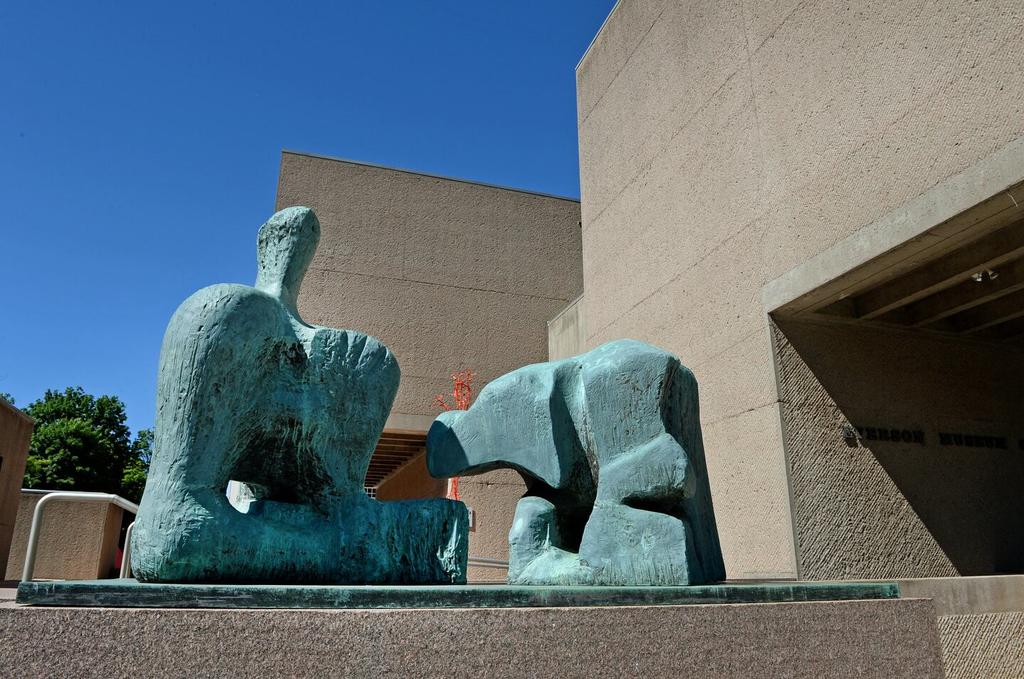
For me, it’s incredibly rewarding to work with community organizations and people who are selfless and serving the public. These are all public charities, serving their charitable mission … What I can bring to that was some of my experiences with other organizations raising money or from an organizational perspective. I’m a big believer in creativity and the arts. So, my involvement with the Everson Museum of Art had to do with having the museum face outward to the community, to schools and to children. That’s why we do our annual photography contest; it reaches out to people.
Not everyone learns the same way. This also comes from my wife, who always talked to me about multiple intelligences. You want to honor different ways that people learn. There’s something about every organization I’ve been involved in … the ones that are probably last with me the longest are the ones that are serving a critical need in the community.
What’s the best piece of advice that a parent, a mentor or a boss ever gave you?
I thought about that for a long time. It’s not an aphorism, it’s by example. My parents, Joe and Anne Raleigh Bousquet, were incredibly empathetic people. It wasn’t what they said, it was what they did. Anytime any one of us would be snarky about someone else, my mother would always say, “Well, he always spoke well of you.” Which was a nice way of saying: “You should speak well of others.”
My dad, I think, was the only person in the history of Central New York to be on the national executive committee of Planned Parenthood back in the 1960s. My mom was involved with everything from the Junior League to Visiting Nurses. So, there was a tradition of getting involved in the community.
What advice would you give for effective leadership, especially for someone who’s new to being a leader or aspiring to become a leader?
Jump in. Get involved. Take it seriously. Don’t go on a board to collect a list of boards you’ve been on. You’ll get more out of being on a board than you’ll give to the organization. It’s part of the fabric of the community.
Getting to know people outside of your narrow view — different walks of life, different backgrounds, different interests — is the most rewarding thing. Life’s short, so try something new.
And don’t let people tell you that you can’t do it. Find a bunch of other people who are better at getting it done and then do it with them.
What career advice would you give a young person starting out now?
Check it out before you buy. Go intern somewhere, get to know [the job]. … It’s a really good idea to kick the tires and get involved before you commit to it.
Would you advise someone to become a lawyer?
Yeah, I think it’s a really exciting time to become a lawyer. It’s a very disruptive time because of AI. It’s going to change more in the next five years than has changed in the last 40 years. … If you want to be involved in something that is going to change dramatically, that’s exciting, challenging and scary, it’s a good time to be a lawyer.
You probably could live anywhere. Why do you choose to live and work in Central New York?
It’s a great place. So many people that I know who’ve moved from other places, they’ve discovered Syracuse. All the Syracusans, they complain about the weather but they’re still here. Where else can you be five minutes from a major university [Syracuse University] and a wonderful Jesuit education [Le Moyne College]. We just have incredible resources here, and it’s easy to get around. The Finger Lakes and the Thousand Islands are here, and you’re like five hours from everywhere else.
There are very few barriers to entry here. It’s easy if you want to get involved in things here, easier than some other places, especially big cities. … And organizations are looking for people who are interested in helping out.
If I handed you a magic wand, what’s one thing you’d change?
I’d like another 40 years!
The weekly “Conversation on Leadership” features Q&A interviews about leadership, success and innovation.
To suggest a candidate for Conversations on Leadership, email Marie Morelli at mmorelli@syracuse.com. Read previous entries in the series.